Courting History: A Continent’s Pride on the Line as SAFF Women’s Futsal Dawns in Thailand
The air in Nonthaburi, Thailand, hums with a new kind of electricity. It’s not the familiar roar of an outdoor football crowd, but the concentrated, resonant energy of a court awaiting its gladiators. From January 13th to 25th, 2026, history will be written here, not with grass-stained boots on a vast pitch, but with swift, deft touches on a polished indoor court. The inaugural SAFF Women’s Futsal Championship is more than a tournament; it is a long-awaited declaration, a stage where the speed, skill, and spirit of South Asia’s women will command a spotlight of their very own.
For years, the narrative of football in our region, while rich with passion, has often echoed with the sounds of the men’s game. But a quiet revolution has been building in training halls and local leagues. Now, that revolution has a banner. This championship embodies the new motto unveiled by the South Asian Football Federation just months ago: “Strength in Unity.” For the first time, the seven sister nations—India, Bangladesh, Nepal, Pakistan, Sri Lanka, Bhutan, and the Maldives—will contest for a futsal crown, each team carrying not just national hopes, but the collective aspiration of a region ready to showcase a different, dynamic face of the women’s game.
The Indian Vanguard: The Futsal Tigresses Poised to Prowl
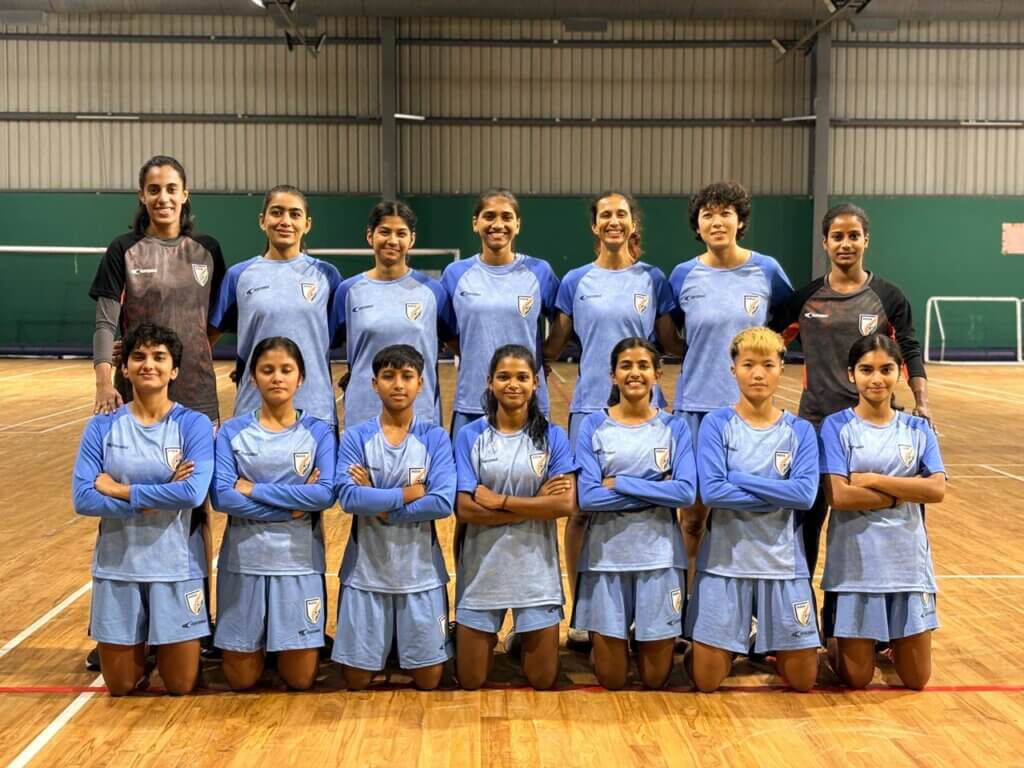
All eyes are naturally drawn to India, a nation whose footballing heartbeat is strong and growing louder in the women’s domain. Fresh off a resounding victory in their SAFF U-20 Women’s Championship opener, the senior futsal squad, nicknamed the Futsal Tigresses, carries that momentum into a completely new arena. Under the guidance of head coach Joshuah Vaz, this team is a compelling blend of experience and fresh ambition.
The core of the squad is steeled by the seven players who tasted international competition in the AFC Women’s Futsal Asian Cup 2025 Qualifiers. Goalkeeper Tanvi Mavani and pivot Khushbu Saroj bring that crucial big-match temperament. They form the defensive and offensive anchors around which the dynamic play of alas (wingers) like Pooja Gupta and Ritika Singh can orbit. The squad announcement itself felt like a moment of arrival, a formal recognition of athletes who have long trained for a stage that didn’t yet exist.
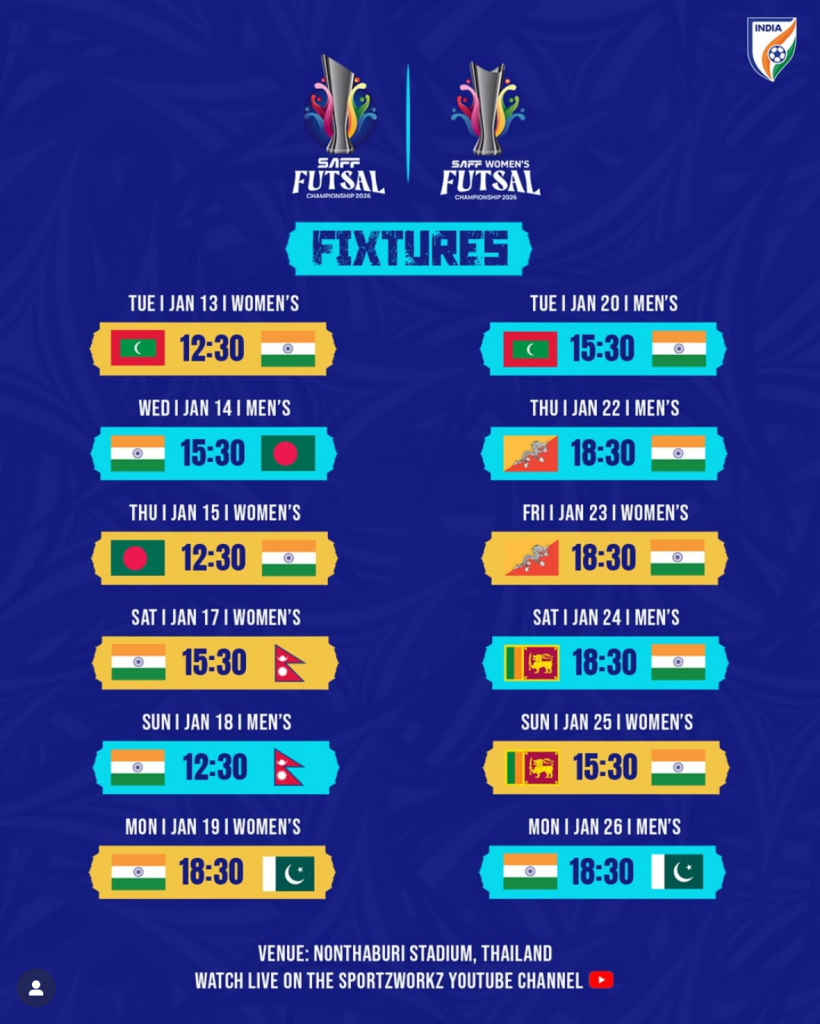
Their campaign is a relentless 12-day test of stamina and strategy, beginning with a clash against the Maldives on January 13th. Key fixtures loom: the encounter with Bangladesh on the 15th promises tactical intrigue, while the historic rivalry with Pakistan on the 19th will be charged with an emotion that transcends sport. Each match, streamed live on the Sportzworkz YouTube Channel, is a chance to convert a nation’s casual interest into unwavering fandom.
The Challengers: A Continent’s Tapestry of Talent
To view this championship solely through an Indian lens would be to miss its beautiful, collective purpose. This is a continental unveiling.
- Bangladesh: Their federation’s confident announcement of a “final 14” signals a team that is prepared and organized. They will be disciplined, defensively structured, and view their opener against India as the perfect platform to make an immediate statement.
- Nepal & Sri Lanka: Both nations have consistently produced technically gifted footballers. The confined, fast-paced futsal court could be the perfect canvas for their flair. Sri Lanka’s official team photos, released under the poignant tagline “Pride. Passion. Purpose,” speak to a profound sense of national representation.
- Pakistan, Bhutan & Maldives: As pioneers in this first edition, these teams carry the flag of possibility. Their journey is about laying a foundation, about that first breathtaking goal, that first defiant save against a favored opponent. They are the essential heart of this “round-robin” format, where every nation faces every other, guaranteeing that no story goes untold.
A Championship Forged in New Beginnings
The symbolism of this moment is profound. The tournament kicks off under SAFF’s newly unveiled logo, a modern emblem for a modernizing federation. It is held not in a traditional South Asian heartland, but in the neutral, world-class facilities of Nonthaburi, Thailand—a statement of professional ambition. The parallel hosting of the men’s championship creates a festival atmosphere, but the women’s event stands proudly on its own merit, a separate and equal celebration.
This is more than a competition for a trophy; it is a foundational stone. For the players, it is the answer to years of “why not?” For young girls across Dhaka, Kathmandu, Lahore, and Thiruvananthapuram, it will provide fast-paced heroes in real time. For the federations, it is the first critical data point, a chance to assess, build, and invest.
As the first whistle blows on January 13th, it will silence a long wait. What follows will be a blur of relentless motion—the percussive sound of the ball, the squeak of shoes, the shouted instructions in a dozen languages and dialects. But within that blur, a clear picture will be coming into focus: the future of South Asian women’s sport. Every dummy, every slide tackle, every perfectly weighted pass into the corner of the mini-meta will be a stitch in a new tapestry. The Futsal Tigresses and their six rival sisters are not just playing for points; they are court-ing history, and in doing so, they are ensuring that the beautiful game in our region finally has a complete, and breathtaking, portrait.